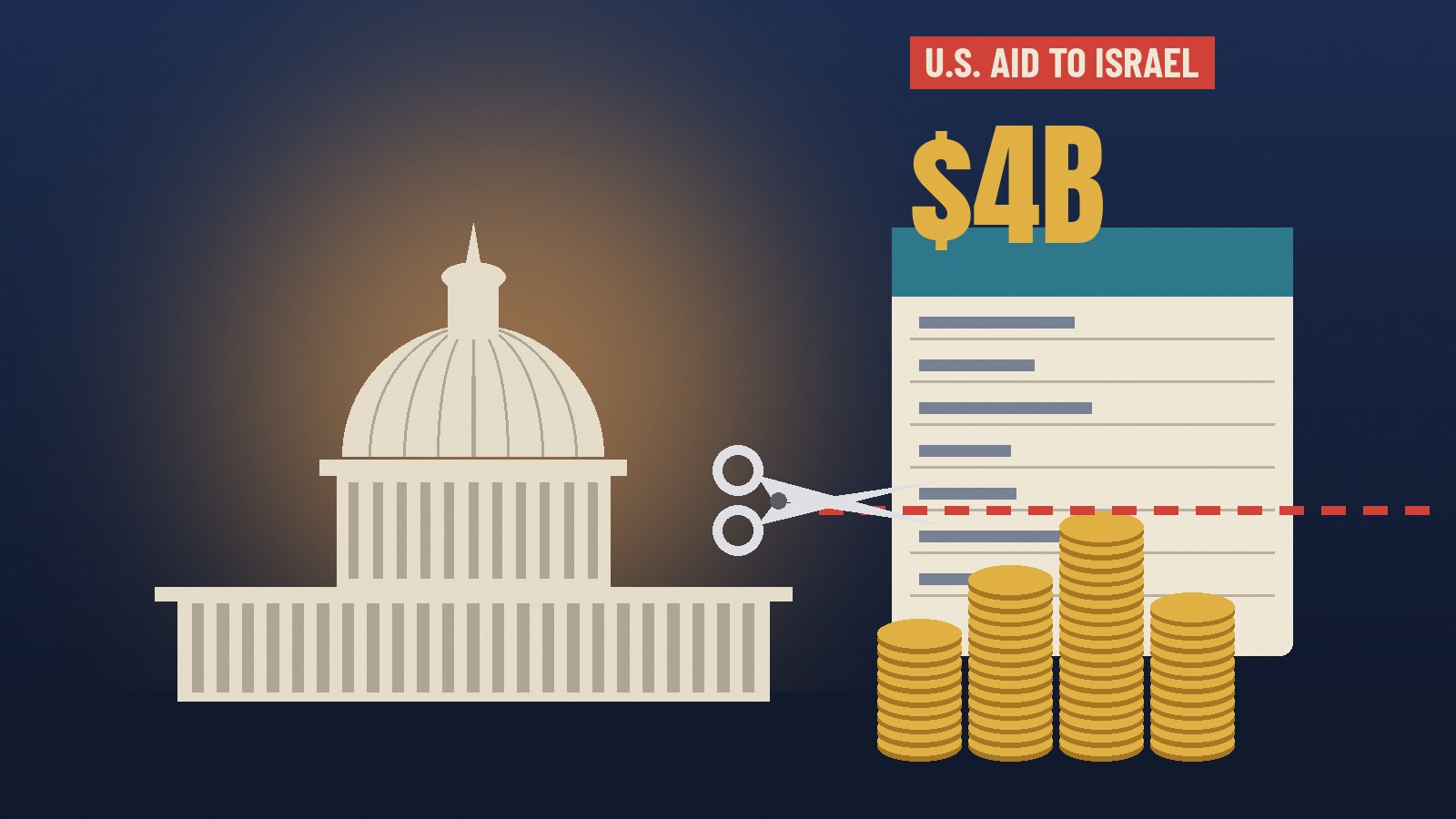

For nearly a decade, roughly $3.8 billion a year in U.S. military aid to Israel has been one of the most predictable lines in Washington’s budget. On Election Day, President Donald Trump said that era is about to end. And he said it far sooner than the deal on paper allows.
Speaking on Fox News’ “Fox & Friends” on Tuesday, Trump said he and Israeli Prime Minister Benjamin Netanyahu had agreed months ago to stop the annual payments. “By the end of this year we won’t be paying Israel,” he said, according to Reuters. “Now we’ll help Israel if they need it.” He added that the U.S. would keep selling weapons to Israel.
What Trump said, and what he didn’t
Trump described the aid as roughly $4 billion a year and said Netanyahu “brought it up,” NBC News reported. He also called the aid issue “a bad talking point.” Reuters noted that he gave no details on how the cutoff would work. Netanyahu’s office declined to comment to NBC.
The timing drew attention. “The curious issue is timing,” Jon Alterman of the Center for Strategic and International Studies told Reuters, as analysts pointed to the announcement landing on the day Americans voted in the midterms.
The deal on paper runs to 2028
The current arrangement is a 10-year memorandum of understanding signed in 2016 that took effect in 2018. It provides $3.3 billion a year in foreign military financing plus $500 million for missile defense, and it expires in 2028, according to NBC. Most of that money is spent in the United States, with American defense firms.
The memorandum is not a legally binding treaty. As the Congressional Research Service explains, Congress decides how much money actually flows through yearly appropriations. That’s why the Associated Press reported that an abrupt shift would be all but impossible. The aid is built into long-term planning and contracts.
Surprise in Israel
The Times of Israel reported that officials in Israel’s Finance Ministry were caught off guard, with one noting that no formal document had been submitted from the Prime Minister’s Office. Netanyahu has talked before about winding down the aid. NBC reported that in January he said he hoped to “taper off” U.S. assistance over a decade.
The budget questions are already starting. Anadolu Agency, citing Israeli public broadcaster KAN, reported estimates of a roughly 12 billion shekel ($3.8 billion) annual gap if the money stopped in January, plus questions about fighter-jet contracts that have already been signed. Opposition politician Yair Golan called the move a “severe blow to Israel’s security,” NBC reported.
Reaction in Washington
Some of the pushback came from Trump’s own party. Republican Rep. Don Bacon told CNN, “What I really had heartburn about is the Israelis didn’t know about it,” according to Reuters. Meanwhile, some Democrats have gone further. Reuters reported that Rep. Ro Khanna listed “zero aid” to Israel as part of the agenda if Democrats won.
Public opinion has shifted too. A Quinnipiac poll in June found that 48% of voters and 66% of Democrats said U.S. support for Israel was too strong, Reuters reported. In 2017, those figures were 16% and 20%.
Why it matters
Military aid to Israel has had strong support from both parties for decades. A sudden stop would be a major shift for U.S. policy in the Middle East and for Israel’s defense budget. It would also matter to the U.S. defense companies that fill Israeli orders. Because Congress controls the purse, though, the final word will likely come from Capitol Hill rather than a TV interview. After Tuesday’s elections, Democrats are set to control both chambers.
What’s next
Watch for any formal paperwork from the White House or Netanyahu’s office, details on whether the cutoff covers missile-defense funding, and how lawmakers handle Israel funding in the next spending bills. Talks on a successor agreement began in May, Anadolu reported. Israel’s own politics are unsettled as well, after an inconclusive election on October 27.
Sources
- Reuters: Trump says US will stop paying Israel after year-end
- NBC News: Trump says U.S. will stop $4B in military aid to Israel by end of 2026
- Associated Press: Trump on ending military aid to Israel
- Times of Israel: Finance Ministry officials said taken off guard
- Anadolu Agency: Israel faces uncertainty over arms deals
- Congressional Research Service: U.S. foreign aid to Israel
Leave a Reply